
Creamy Butternut Squash Thai Red Curry With Coconut Milk
This butternut squash Thai curry blends creamy coconut milk with fragrant red curry paste for a smooth yet vibrant flavour. Sweet squash and tangy lime leaves create a comforting, lightly spiced dish perfect for busy evenings.
Butternut squash Thai curry is a quick and easy, yet deeply satisfying, vegetable-forward weeknight meal. And you can have it on the table in 30 minutes!
Making Thai red curry with butternut squash is a delicious trick I learned at the cooking school in Chiang Mai, Northern Thailand. The sweet butternut gently cooks in traditional Thai curry sauce with its spicy, fragrant curry paste mellowed by creamy coconut milk. Makrut lime leaves add that classic Thai flavour, while fish sauce and sugar bring the savoury-sweet balance we all love.
My favourite thing about this veggie red curry recipe?
You can make it work with what you have. It is seriously good with butternut squash cubes, but it’s also utterly delicious with sweet potato or kabocha squash. And, the recipe is vegan-friendly with a few simple substitutes. And, if you prefer to add protein, see how in my Thai red curry fish recipe.
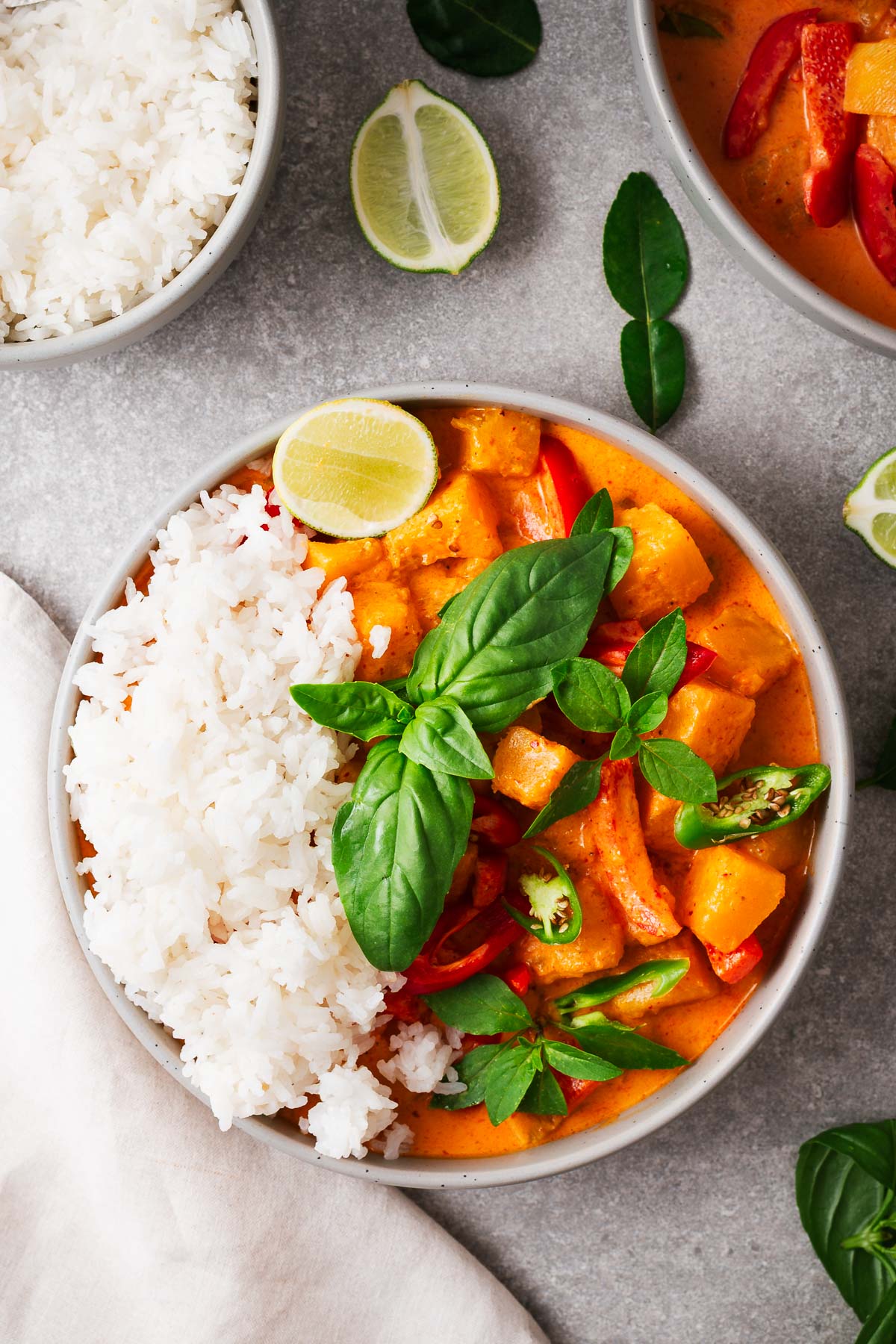
Why I love making butternut squash red curry
Simple and quick: The one-pot curry is a simple and quick weeknight meal.
Well-balanced layers of flavour: Creamy coconut milk, fragrant Thai red curry paste, and the subtle citrus of makrut lime leaves, balanced with fish sauce and palm sugar, create those traditional Thai flavours I so often crave.
Flexible ingredient swaps: You can easily use sweet potato, kabocha squash, or carrots instead of butternut. Or, try zucchini, green beans, or broccoli florets in the place of the red bell pepper. Use what you have on hand!
Vegan-friendly option: The coconut curry recipe is naturally dairy-free. And, with simple swaps like vegetarian curry paste and light soy sauce, this recipe easily adapts for vegetarian and plant-based diets.
Ingredients and substitutes
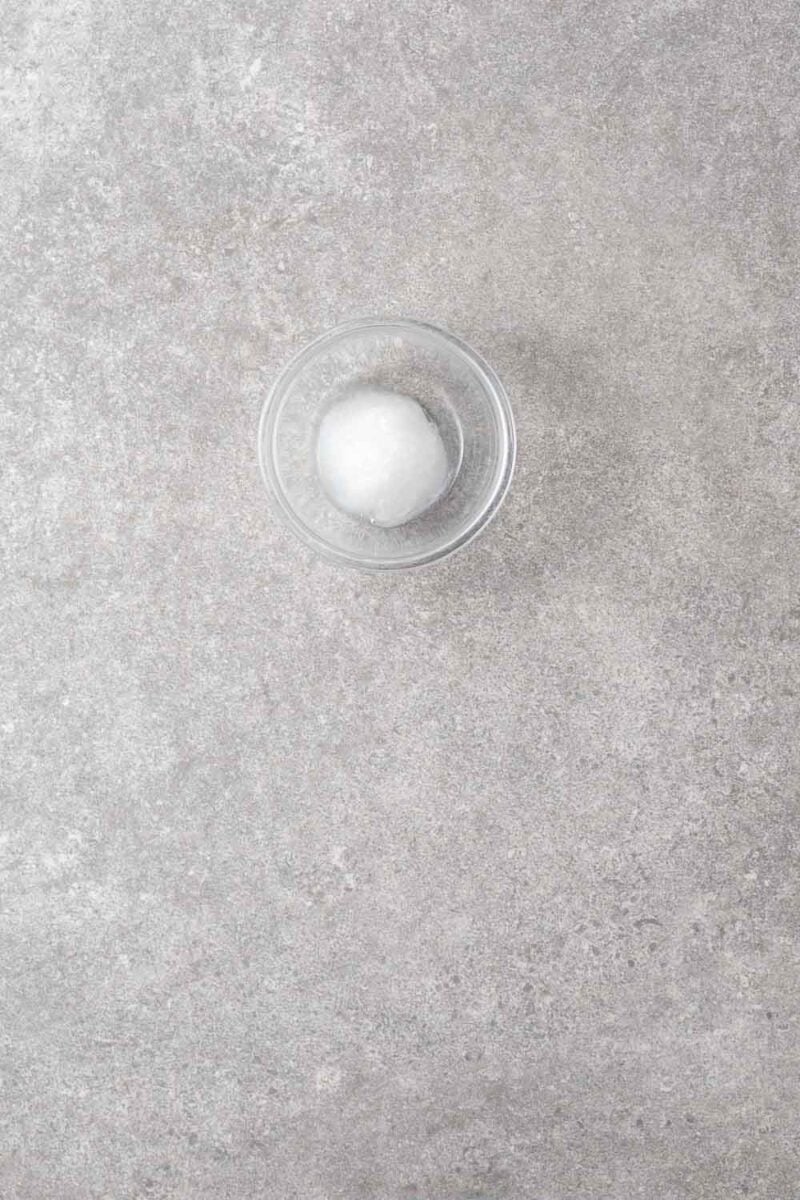
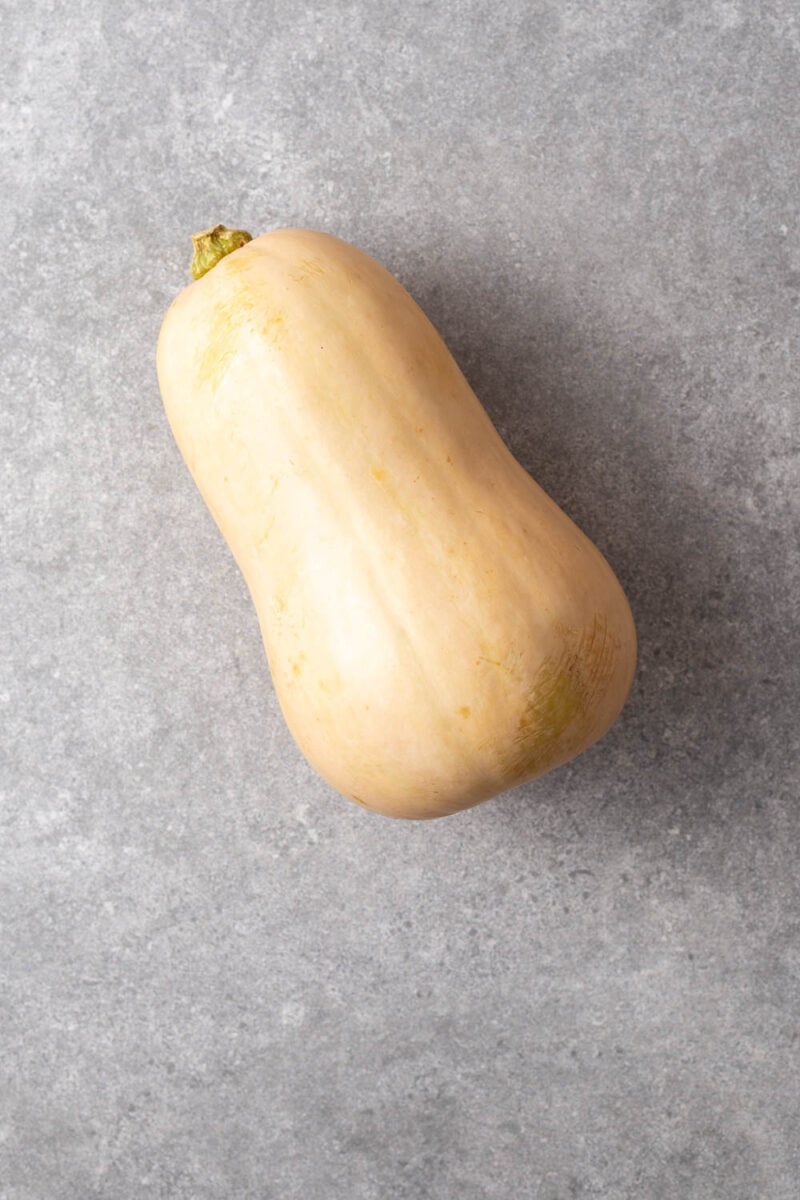

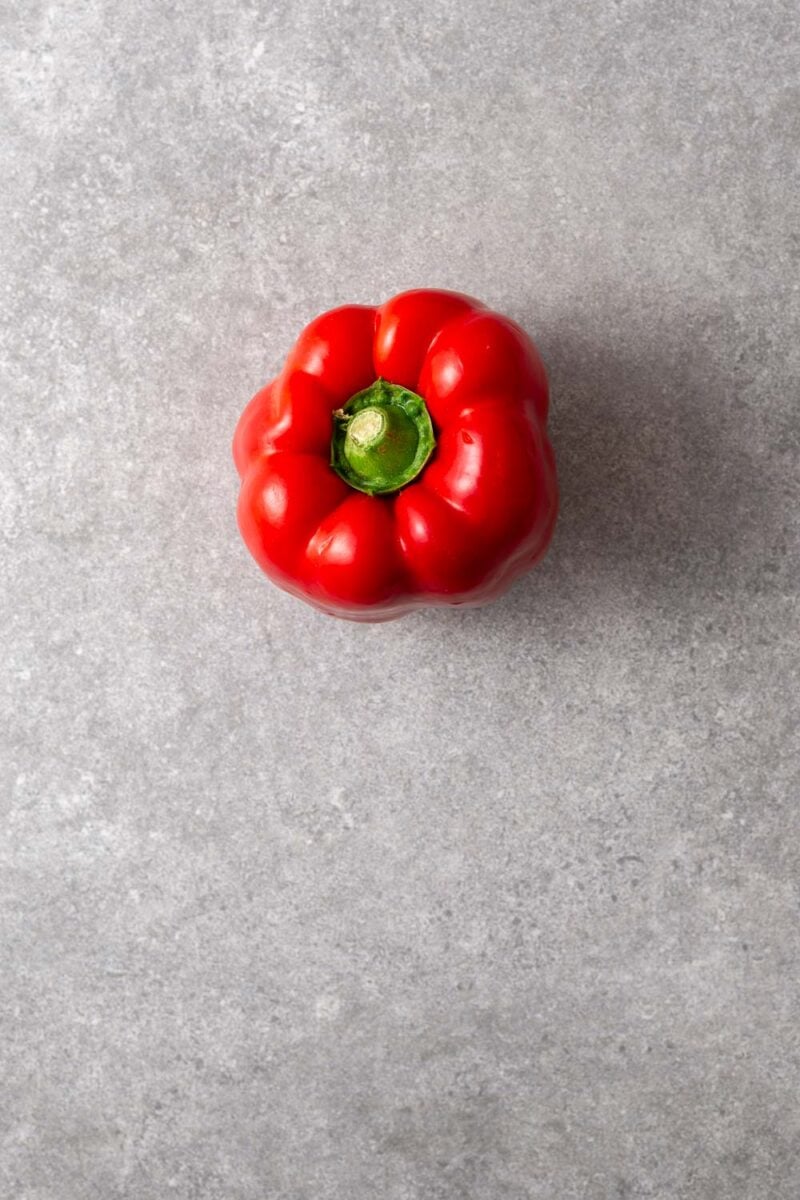


- Coconut oil: The oil blooms the curry paste by releasing its essential oils. However, if you have pure full-fat coconut milk in a carton (without emulsifiers or stabilisers) that splits easily, you can omit the oil. Simply bloom the curry paste in the coconut milk. (See how to make butternut red curry for instructions.) You can also swap coconut oil for vegetable oil.
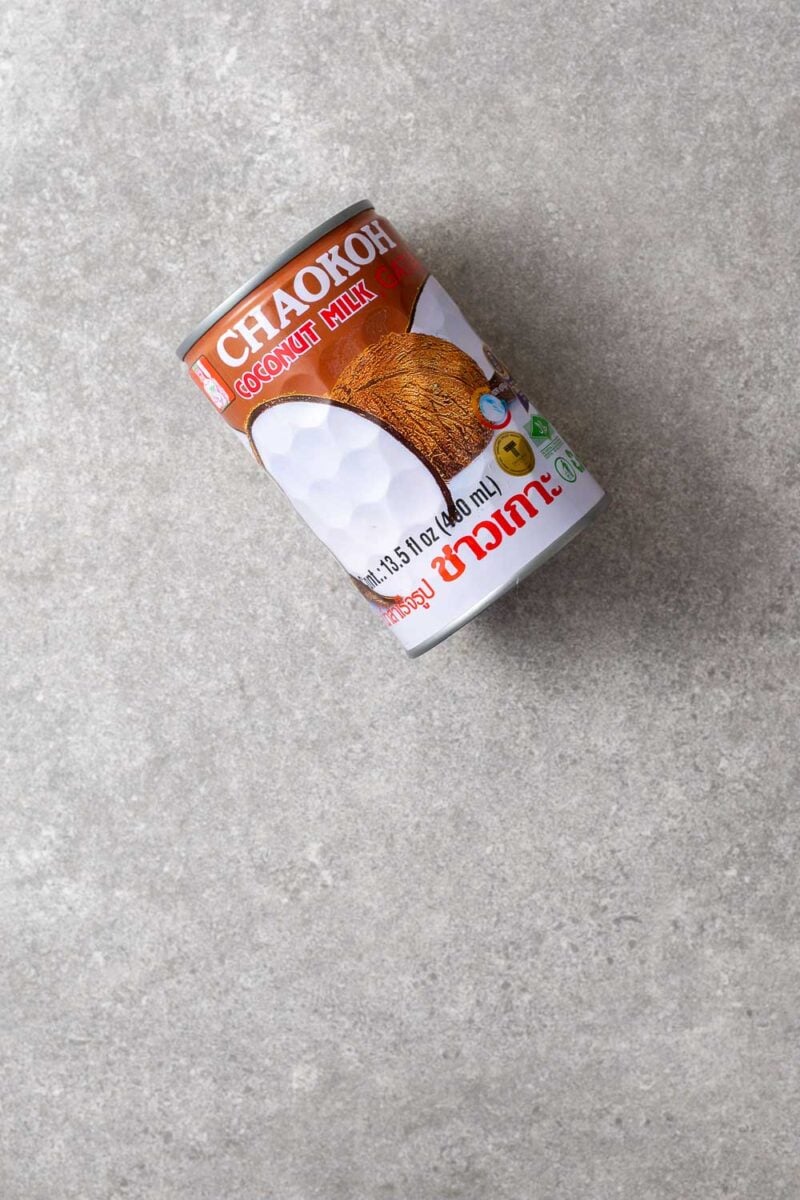
- Full-fat coconut milk: Use good-quality cartons or canned full-fat coconut milk. For an extra indulgent version, coconut cream can replace some of the coconut milk.
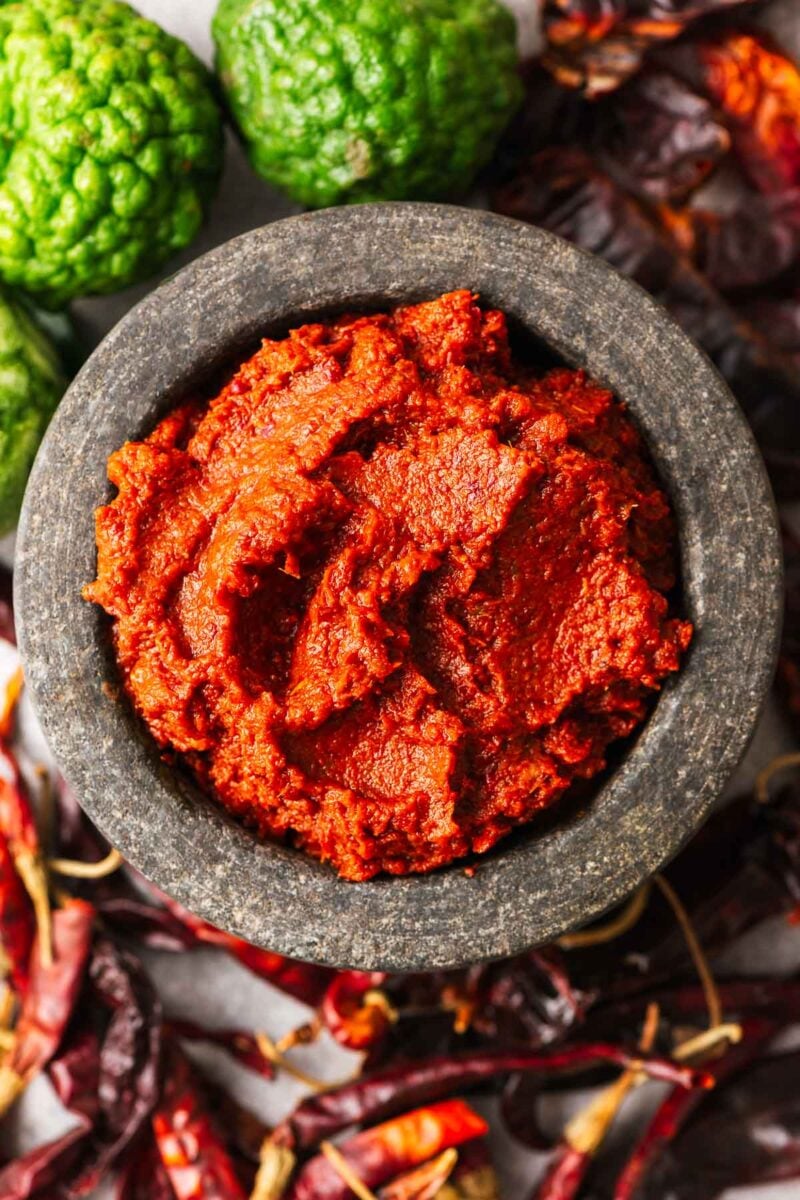
- Thai red curry paste: Homemade curry paste is great because you can adjust the spiciness to your preference. But good-quality Thai brands like Mae Ploy also work perfectly well. If you can’t find it at your local store, try Asian grocery stores or online. Or, try one of these red curry paste substitutes. This recipe also works with panang, massaman or yellow curry paste.
Top tip: For dietary requirements, double-check the Thai curry paste ingredient list to find a gluten-free or vegan curry paste. Traditional red curry paste includes shrimp paste. For vegan curry paste, your best bet is to swap it for Mae Ploy yellow curry paste!
- Butternut squash: You can buy pre-cubed butternut to save prep time, but I prefer to use a whole butternut squash because I almost always have one in the pantry. Or, swap the butternut for another veg. Try sweet potatoes, kabocha squash, or carrots for a similar texture and natural sweetness.
- Water or vegetable stock: Use this to loosen the curry’s consistency. Plain water works well, but you can use vegetable stock for extra flavour. Alternatively, add more coconut milk for a richer sauce.
- Red bell pepper: Adds crunch and contributes to the subtle sweetness. You can use any colour bell pepper, or try it with another quick-cooking veg like zucchini (courgette), green beans, or stir in some baby spinach right at the end of cooking.
- Fresh Makrut lime leaves: These impart a fragrant citrus aroma essential to Thai cuisine. If unavailable, use frozen or dried lime leaves. You can also grate in some Thai lime zest if it’s all you can find. (You may know makrut lime leaves as kaffir lime leaves.)
Top tip: Lime leaves freeze well, so buy them when you see them and keep them in the freezer! Use them whole, straight from the freezer, to add flavour to your Thai curries and soups.
- Fish sauce: Essential for that salty, umami depth typical in Thai curries. For a vegan butternut squash curry, replace with fine sea salt or light soy sauce/tamari for a savoury balance.
- Palm sugar: Balances heat and salt with a gentle caramel sweetness. You can also use coconut sugar or brown sugar instead.
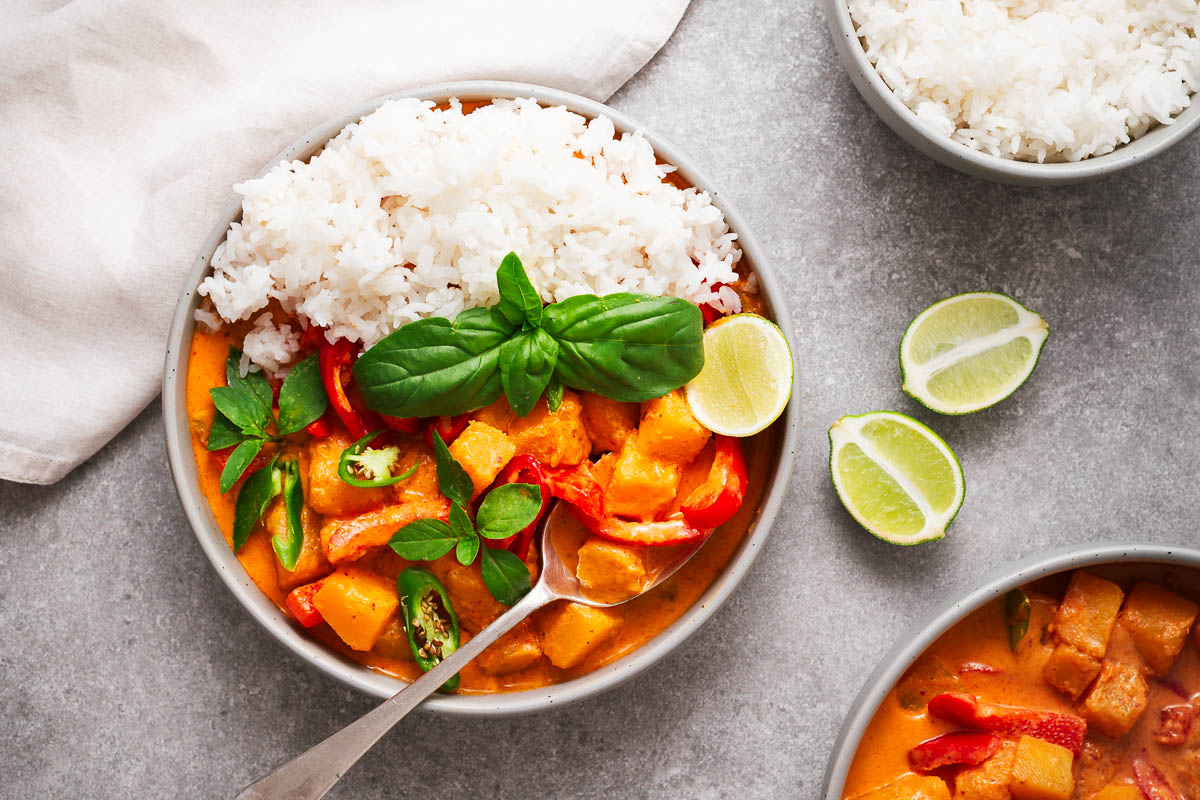
What I serve with Thai butternut curry
- White rice or brown rice: I love Jasmine rice for its fragrant floral notes, or Thai sticky rice for that Northern Thailand nostalgia.
- Green or red chillies (optional): Sliced fresh chillies add extra heat and colour at serving. Adjust quantity based on your tolerance for spice.
- Fresh herbs: They add some brightness to the dish. I adore Thai basil, but if it’s unavailable, try sweet basil or fresh cilantro. Use whichever herb you prefer or have on hand.
- Fresh lime wedges: A squeeze of fresh lime juice provides acidity and a fresh citrus punch to finish the curry.
See the serving suggestions section for more ideas.
How to make Thai butternut squash red curry


Step 1: Heat two tablespoons of coconut oil in a large pan over medium heat. Add the Thai red curry paste and cook, stirring frequently, for about two minutes until fragrant.
Step 2: Pour in half a cup of the coconut milk and bring to a boil. Stir often until the sauce thickens and bright red oil appears, about 2 minutes.
Tip: If your coconut milk contains no emulsifiers, scoop the separated coconut cream from the top, and use it instead of coconut oil in Step 1 to bloom the red curry paste.
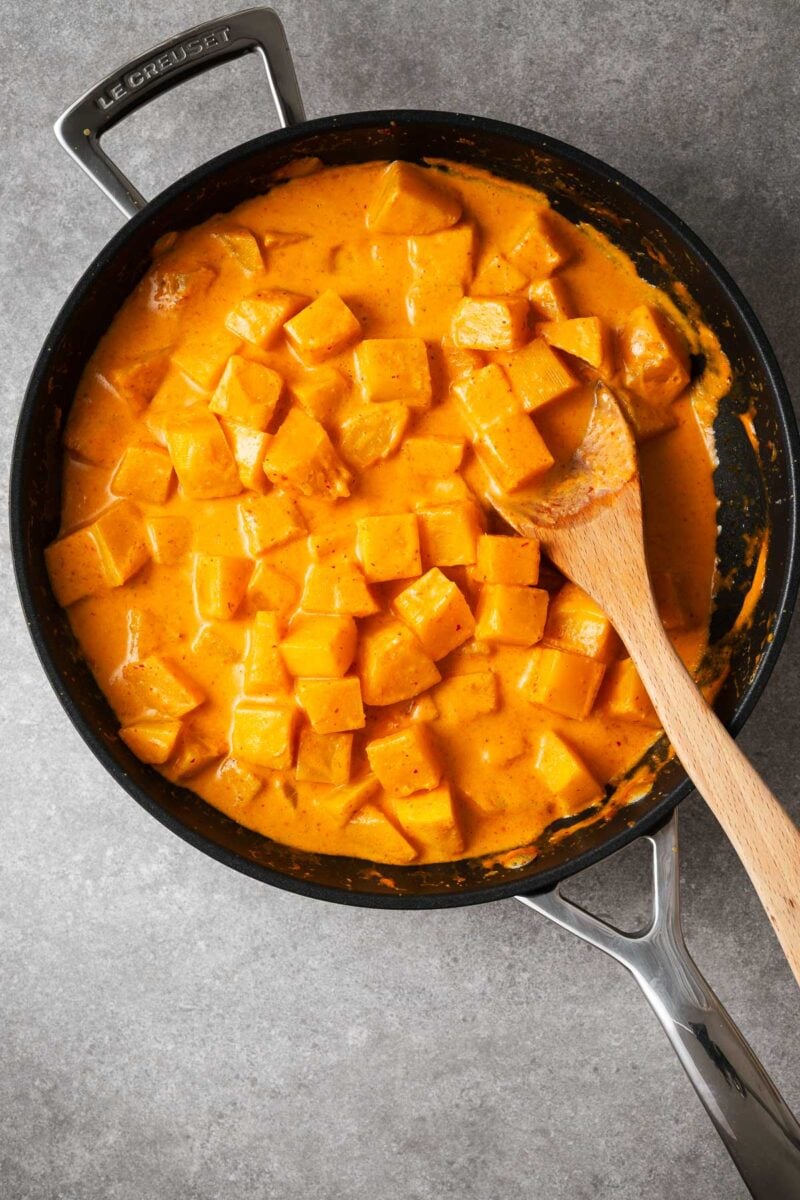
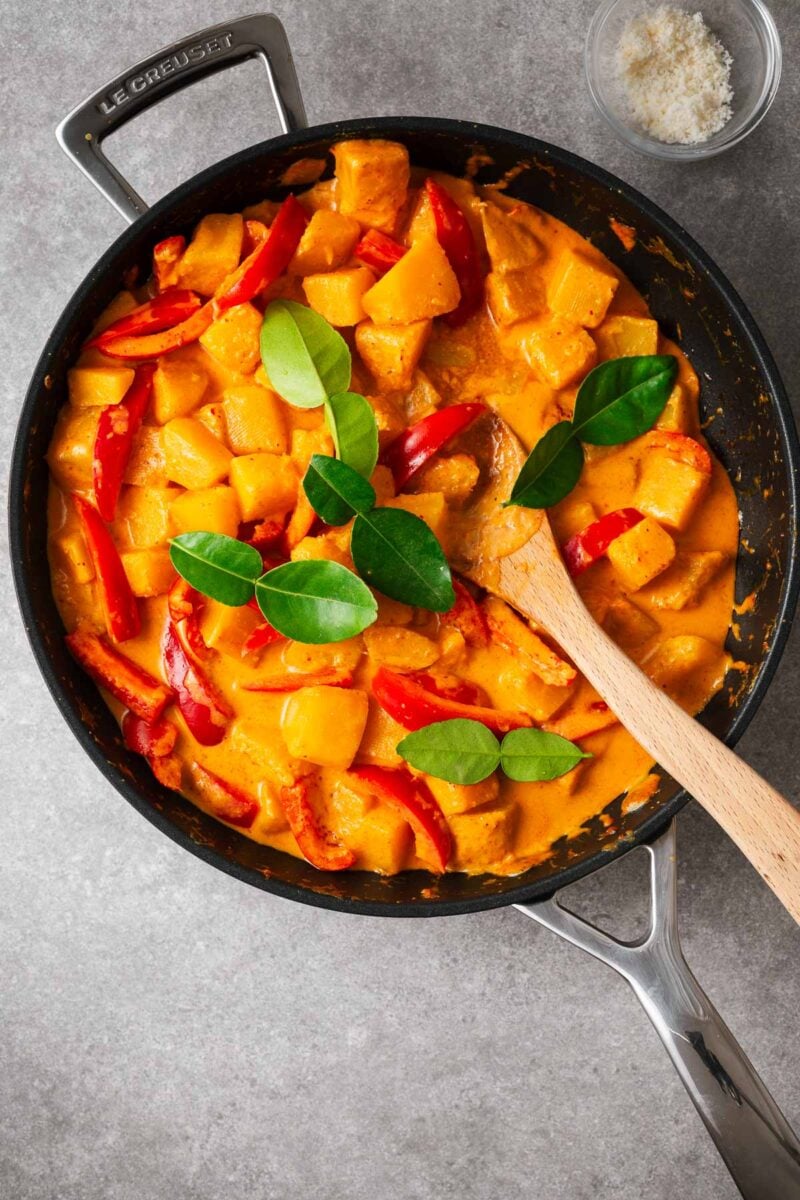
Step 3: Add the remaining coconut milk, cubed butternut squash, and half a cup of water or vegetable stock. Stir to coat, then simmer, uncovered, for 10 to 15 minutes, until the squash is tender but still has a bite. Add more water if the sauce thickens too much.
Step 4: Tear or bruise the makrut lime leaves to release their aroma (or remove the spine and slice them into thin strips). Add them to the pan, along with the sliced red bell pepper. Simmer for three minutes until the pepper is crisp-tender.
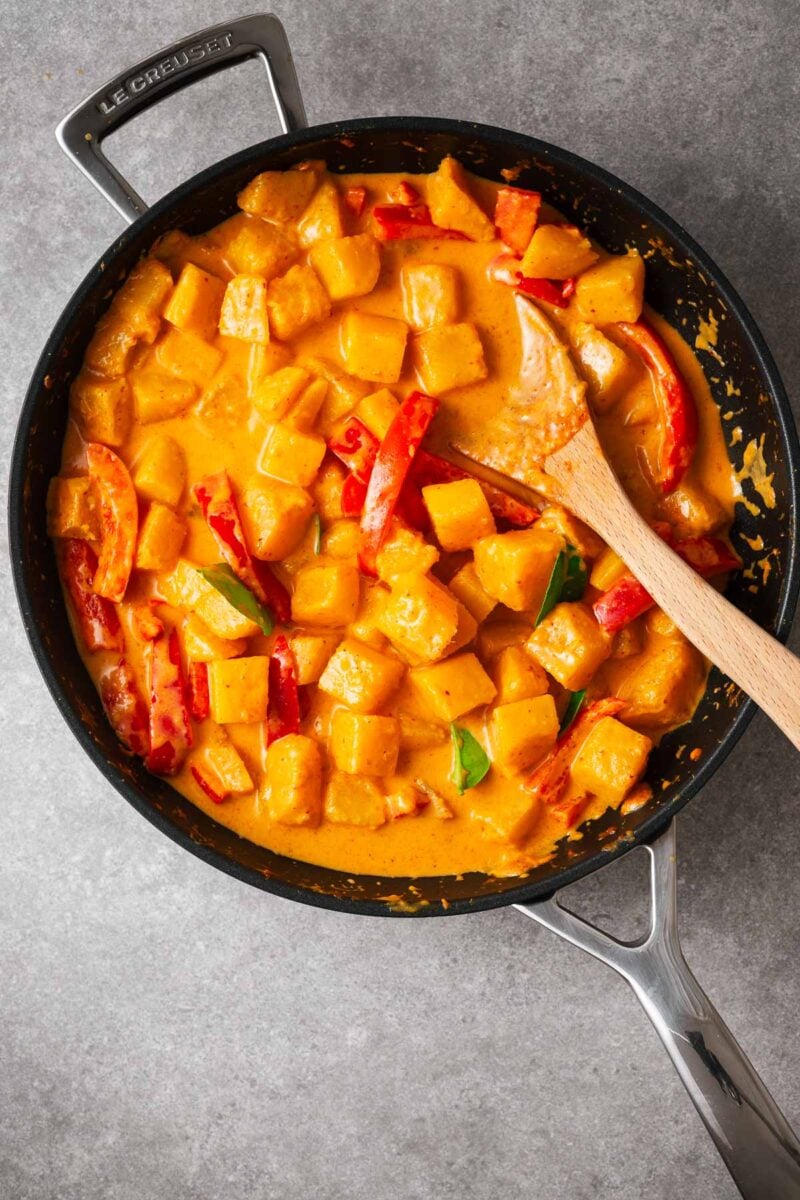
Step 5: Season with fish sauce and palm sugar. Taste and adjust the balance by adding more fish sauce, sugar, water, or coconut milk as needed.
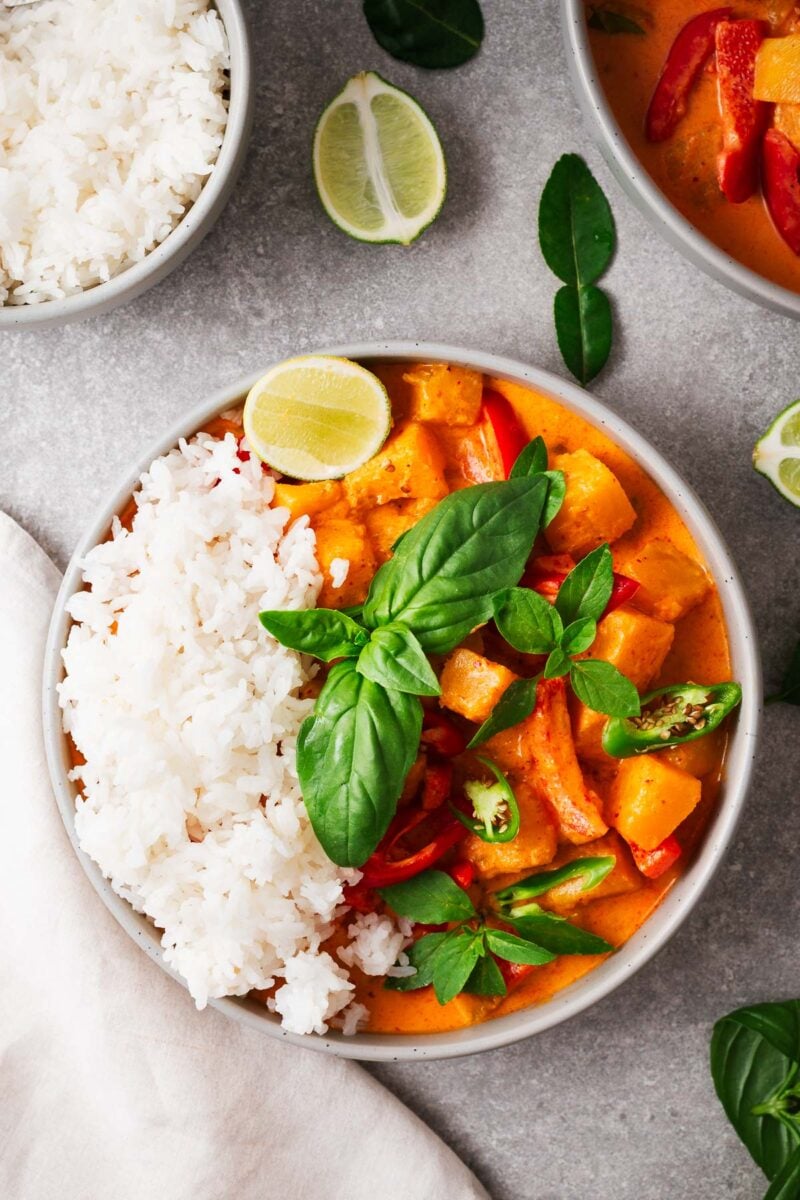
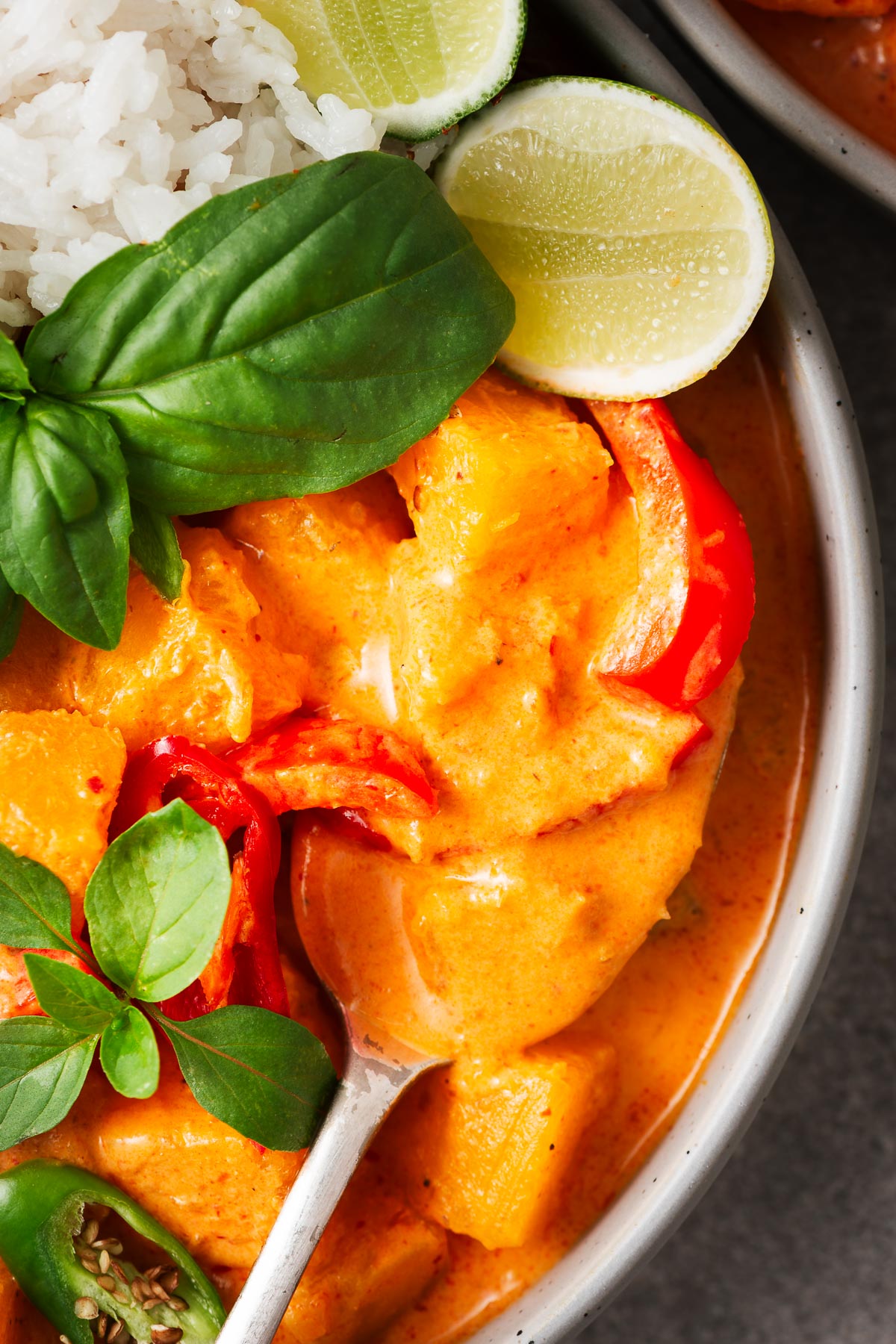
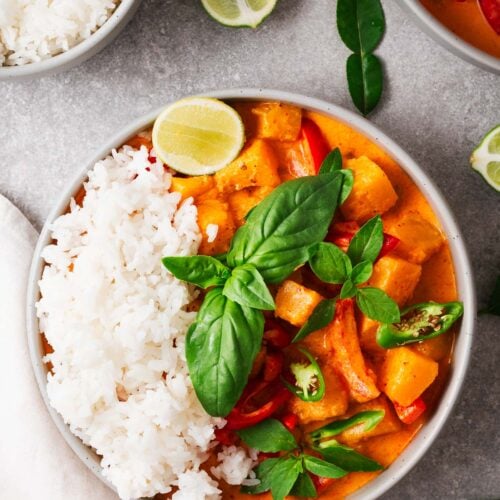
Step 6: Serve the curry over steamed rice or noodles. Garnish with Thai basil, sweet basil, or chopped cilantro, sliced chillies, and lime wedges.
Want more protein? See how to make Thai red curry with fish.
Serving suggestions
Serve with a side of rice: Serve your red curry the traditional way, with a side of steamed rice. Use jasmine rice or Thai sticky rice for an authentic Thai meal. Or use your favourite rice.

Thai curry soup: Add an extra cup of coconut milk or vegetable stock for an easy red curry butternut squash soup. Adjust the flavour with more fish sauce and sugar. This is also a great way to stretch any leftover butternut curry!
Make it noodle soup: Add some cooked rice noodles to the butternut curry soup for a bowl of comforting curry noodle soup.
Swap out the toppings: Get adventurous with the garnishes and add crispy fried noodles, fried shallots, or roasted peanuts for some crunch. Or, serve it with prik nam pla (spicy Thai fish sauce condiment), for everyone to adjust the flavour to taste tableside.
Try it with naan: Now I know this one isn’t strictly traditional, but no one ever complained about warm roti or naan with a comforting coconut curry.
Looking for more Thai recipes?
I hope this butternut squash Thai red curry brings a bit of Thai comfort to your kitchen, whether you serve it over jasmine rice or turn it into a cosy curry noodle soup!
Ingredients
- 2 tablespoons coconut oil* (optional)
- 1 can (13.5 fluid ounces) full-fat coconut milk , divided
- 2–3 tablespoons Thai red curry paste , homemade or store-bought* (vegan substitute: Mae Ploy yellow curry paste)
- 6 cups butternut , cut into bite-sized cubes (1 small butternut)
- ½ cup water , or vegetable stock
- 1 red bell pepper , deseeded with white membrane removed, cut into bite-sized strips
- 5 makrut lime leaves
- 1 tablespoon fish sauce , more to taste (vegan substitute: 1 teaspoon fine sea salt, or 1 tablespoon light soy sauce)
- 1 tablespoon palm sugar (or coconut sugar or brown sugar) , more to taste
To Serve (Optional)
- steamed white rice (I prefer jasmine rice) , brown rice, or rice noodles
- green or red chillies , sliced diagonally
- Thai basil leaves , sweet basil, or chopped cilantro (coriander leaves)
- fresh lime wedges
Instructions
- Add 2 tablespoons of coconut oil to a large frying pan over medium heat. Once the oil is hot, add the curry paste. Cook, stirring frequently for about 2 minutes until you have a bright red, fragrant oil. Add a ¼ cup of the coconut milk and bring it to a boil. Let it cook, stirring often, until the sauce is thick with bright red oil drops in the creamy sauce – about 2 minutes.
- Add the remaining coconut milk, the butternut squash cubes, and ½ cup of water (or more coconut milk). Stir to coat. Bring it to a gentle simmer and cook over medium heat, uncovered, until the butternut is tender but retains a bite – about 10 to 15 minutes. Add a splash of water if the sauce gets too thick. You should aim for a sauce that coats the back of a spoon.
- Bruise or tear the makrut lime leaves to release their aroma. Then, add them along with the sliced red bell pepper. Simmer for 3 minutes or until the pepper is crisp-tender.
- Season with the fish sauce and palm sugar. Taste and adjust to create a slightly salty but well-balanced flavour – I add another tablespoon of fish sauce. If the sauce is too thick, add a splash of water, or, if it’s too spicy, add a little coconut milk.
- Serve the Thai butternut squash curry over rice or noodles. Garnish the bowls with fresh herbs (Thai basil, sweet basil, or cilantro), sliced chillies, and lime wedges to squeeze over the curry.
Notes
- Coconut milk or coconut oil? Traditional Thai red curry recipes rely on boiling coconut milk to split and release a bright red oil that carries the flavours of the red Thai curry paste. However, the emulsifiers used to thicken and stabilise commercial canned coconut milk can keep it from splitting, so starting with coconut oil helps. If you have pure coconut milk that splits when heated, you can skip the oil and bloom the paste in the coconut milk alone – or bloom it in coconut cream for a richer curry.
- Curry paste: Use homemade red curry paste or a good Thai store-bought brand like Mae Ploy. I use 3 tablespoons for a properly spicy and flavourful red curry. For milder heat, use 2 tablespoons or add more coconut milk for a gentler, soupier finish. Don’t add more curry paste – Thai curry pastes can be quite salty. If you want it extra hot, garnish your dish with more sliced chillies.
- Vegetarian note: Many Thai red curry pastes contain shrimp paste. Use a vegetarian paste (or make red curry paste without shrimp paste). And, season your curry with plain salt instead of fish sauce. You can also swap it for a light soy sauce or tamari for more depth. If you can’t find vegan red curry paste, try Mae Ploy yellow curry paste.
- Mix up the veggies: This vegetable curry recipe is very versatile! You can swap the butternut added in step 2 for sweet potato, kabocha squash, or carrots. Add tender veg (broccoli, courgette/zucchini) in the last 2 to 3 minutes.
- Makrut lime leaves: I like to serve the curry with the whole leaves and just eat around them. But you can also julienne them if you’d rather not pick around the leaves.
- Storage: Refrigerate leftover butternut squash curry in an airtight container for up to four days. Reheat it gently with a splash of water or vegetable broth. Freezes well for up to 3 months; thaw overnight in the fridge and reheat gently.

This butternut squash Thai curry is one of my favourite curry recipes, and it’s so versatile. Let me know in the comments how you customised it to fit your taste (and fridge)!