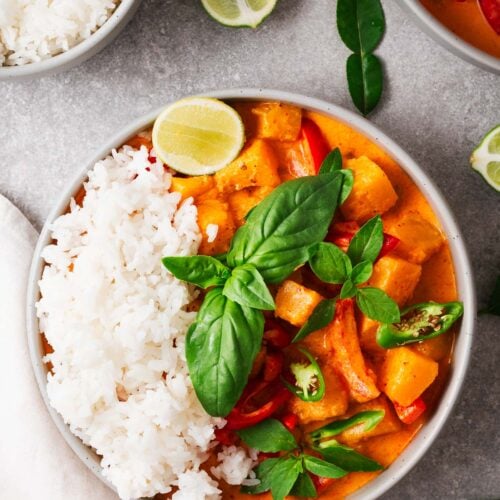
This butternut squash Thai curry is a comforting, one-pot dish loaded with creamy coconut milk, sweet butternut squash, and the punchy flavours of a Thai red curry. Quick and easy to prepare, it’s perfect for a busy weeknight dinner.
Servings4 people
Ingredients
- 2 tablespoons coconut oil* (optional)
- 1 can (13.5 fluid ounces) full-fat coconut milk , divided
- 2–3 tablespoons Thai red curry paste , homemade or store-bought* (vegan substitute: Mae Ploy yellow curry paste)
- 6 cups butternut , cut into bite-sized cubes (1 small butternut)
- ½ cup water , or vegetable stock
- 1 red bell pepper , deseeded with white membrane removed, cut into bite-sized strips
- 5 makrut lime leaves
- 1 tablespoon fish sauce , more to taste (vegan substitute: 1 teaspoon fine sea salt, or 1 tablespoon light soy sauce)
- 1 tablespoon palm sugar (or coconut sugar or brown sugar) , more to taste
To Serve (Optional)
- steamed white rice (I prefer jasmine rice) , brown rice, or rice noodles
- green or red chillies , sliced diagonally
- Thai basil leaves , sweet basil, or chopped cilantro (coriander leaves)
- fresh lime wedges
Instructions
- Add 2 tablespoons of coconut oil to a large frying pan over medium heat. Once the oil is hot, add the curry paste. Cook, stirring frequently for about 2 minutes until you have a bright red, fragrant oil. Add a ¼ cup of the coconut milk and bring it to a boil. Let it cook, stirring often, until the sauce is thick with bright red oil drops in the creamy sauce – about 2 minutes.
- Add the remaining coconut milk, the butternut squash cubes, and ½ cup of water (or more coconut milk). Stir to coat. Bring it to a gentle simmer and cook over medium heat, uncovered, until the butternut is tender but retains a bite – about 10 to 15 minutes. Add a splash of water if the sauce gets too thick. You should aim for a sauce that coats the back of a spoon.
- Bruise or tear the makrut lime leaves to release their aroma. Then, add them along with the sliced red bell pepper. Simmer for 3 minutes or until the pepper is crisp-tender.
- Season with the fish sauce and palm sugar. Taste and adjust to create a slightly salty but well-balanced flavour – I add another tablespoon of fish sauce. If the sauce is too thick, add a splash of water, or, if it’s too spicy, add a little coconut milk.
- Serve the Thai butternut squash curry over rice or noodles. Garnish the bowls with fresh herbs (Thai basil, sweet basil, or cilantro), sliced chillies, and lime wedges to squeeze over the curry.
Notes
- Coconut milk or coconut oil? Traditional Thai red curry recipes rely on boiling coconut milk to split and release a bright red oil that carries the flavours of the red Thai curry paste. However, the emulsifiers used to thicken and stabilise commercial canned coconut milk can keep it from splitting, so starting with coconut oil helps. If you have pure coconut milk that splits when heated, you can skip the oil and bloom the paste in the coconut milk alone – or bloom it in coconut cream for a richer curry.
- Curry paste: Use homemade red curry paste or a good Thai store-bought brand like Mae Ploy. I use 3 tablespoons for a properly spicy and flavourful red curry. For milder heat, use 2 tablespoons or add more coconut milk for a gentler, soupier finish. Don’t add more curry paste – Thai curry pastes can be quite salty. If you want it extra hot, garnish your dish with more sliced chillies.
- Vegetarian note: Many Thai red curry pastes contain shrimp paste. Use a vegetarian paste (or make red curry paste without shrimp paste). And, season your curry with plain salt instead of fish sauce. You can also swap it for a light soy sauce or tamari for more depth. If you can't find vegan red curry paste, try Mae Ploy yellow curry paste.
- Mix up the veggies: This vegetable curry recipe is very versatile! You can swap the butternut added in step 2 for sweet potato, kabocha squash, or carrots. Add tender veg (broccoli, courgette/zucchini) in the last 2 to 3 minutes.
- Makrut lime leaves: I like to serve the curry with the whole leaves and just eat around them. But you can also julienne them if you’d rather not pick around the leaves.
- Storage: Refrigerate leftover butternut squash curry in an airtight container for up to four days. Reheat it gently with a splash of water or vegetable broth. Freezes well for up to 3 months; thaw overnight in the fridge and reheat gently.